The Sandwich Makers Locked Out of the Sandwich Industry
Jimmy John's made minimum-wage workers sign a two-year non-compete — until two state attorneys general forced them to drop it
What happened
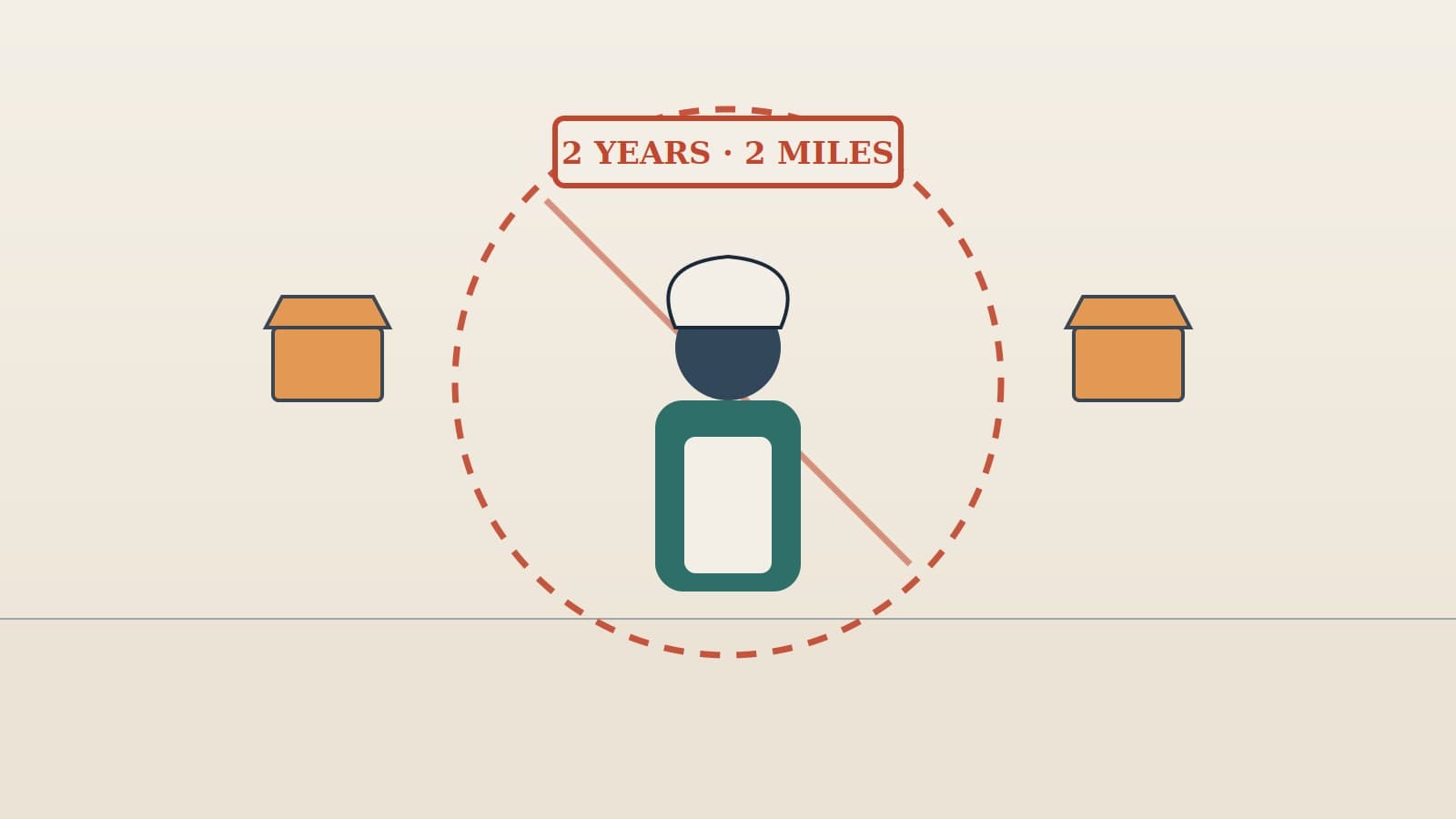
Jimmy John's, the national sandwich chain, required virtually all of its employees — including sandwich makers and delivery drivers earning at or near minimum wage — to sign a non-compete agreement. The clause surfaced publicly when employees sued, and it stunned employment lawyers: by its terms, a worker could not take a job at any business that made a significant share of its revenue from sandwiches, within two miles of any Jimmy John's location, for two years after leaving.
For a low-wage worker in a city dense with sandwich shops, that's a near-total bar on working in their field after quitting.
The trap in the contract
The agreement failed on every axis courts use to judge a non-compete:
- No legitimate interest to protect. Sandwich makers and drivers aren't exposed to trade secrets or confidential strategy. There was nothing the restriction could legitimately guard.
- Unreasonable geography. A two-mile radius around every franchise location blankets entire metro areas.
- Unreasonable duration. Two years is a long time to keep a minimum-wage worker out of an entire industry.
- No fair exchange. Workers got no extra pay or benefit for signing — it was buried in a generic onboarding package.
As the Illinois Attorney General put it, locking low-wage workers into their jobs and barring better-paying work elsewhere gave the company no reason to raise wages.
What the regulators did
This case never needed a trial verdict — the pressure of enforcement did the work:
- In June 2016, the New York Attorney General announced an agreement under which Jimmy John's would stop including the non-compete in hiring materials and would void the agreements already signed.
- In 2016, the Illinois Attorney General filed suit seeking to void all of the forms; the company ultimately agreed to stop using them and release workers.
The result: non-compete agreements covering roughly 10,000 workers were rescinded, and the company stopped imposing them.
Why this matters for predatory contracts today
This case became a national symbol of non-compete overreach and helped drive a wave of reform. Today:
- Several states ban or sharply limit non-competes. California, North Dakota, and Oklahoma void nearly all of them; California law (SB-699/AB-1076) even lets workers sue and recover damages and attorneys' fees, and required employers to notify workers their non-competes were void.
- Many states refuse to "blue-pencil" (rewrite) an overbroad non-compete — if it's too broad, the whole thing can fall.
- Federal scrutiny continues. The FTC has pursued non-compete overreach as an unfair method of competition.
Red flags to check your own non-compete for
- You have no access to trade secrets or key clients, yet you're restricted anyway.
- The geography is huge or undefined ("anywhere we operate").
- The duration is long relative to your role (a year or more for an hourly job).
- You got nothing extra for signing — no raise, bonus, or "garden leave" pay.
- It was slipped into a stack of onboarding forms with no chance to negotiate.
This article is general legal information, not legal advice. Non-compete enforceability is highly state-specific and changing fast. Check your state's current law and consult a licensed employment attorney before relying on any of this.